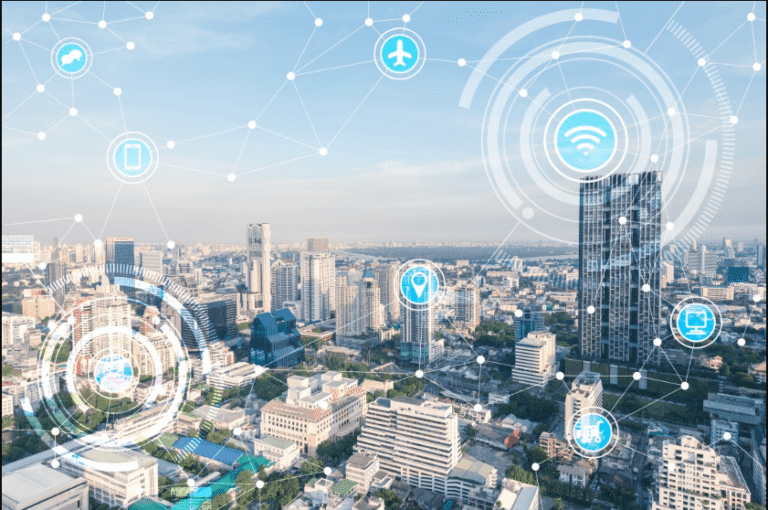
The integration of AI in smart city infrastructure presents a transformative approach to urban challenges. By utilizing machine learning algorithms, cities can enhance mobility, improve safety, and optimize resource allocation. These technologies not only facilitate efficient traffic management but also bolster public security through predictive analytics. However, the complexities of implementation raise questions about sustainability and equity. As urban areas continue to evolve, understanding the implications of AI becomes increasingly critical.
Enhancing Urban Mobility Through AI Solutions
As urban populations continue to swell, the integration of artificial intelligence (AI) into smart city infrastructure emerges as a pivotal strategy for enhancing urban mobility.
AI facilitates the deployment of autonomous vehicles, optimizing their routes through advanced traffic prediction algorithms. This technology not only alleviates congestion but also empowers individuals with greater freedom of movement, ultimately shaping a more efficient urban landscape.
See also: The Role of 3D Printing in Modern Manufacturing
AI-Driven Public Safety and Security Measures
Integrating AI-driven technologies into public safety and security frameworks significantly enhances the ability of cities to respond to emergencies and maintain community safety.
By employing sophisticated surveillance technology, municipalities can monitor public spaces more effectively.
Additionally, predictive policing algorithms analyze data to anticipate criminal activity, enabling proactive measures that uphold civil liberties while fostering a secure environment for residents.
Optimizing Resource Management With Artificial Intelligence
The implementation of AI in public safety and security measures paves the way for advancements in resource management across urban environments.
By analyzing data patterns, AI optimizes energy consumption, reducing operational costs and minimizing environmental impact.
Furthermore, intelligent waste management systems utilize predictive analytics to streamline collection routes, ensuring efficient resource allocation.
This integration fosters sustainable urban development while promoting autonomy and resilience for city inhabitants.
Conclusion
In an era where AI reigns supreme, the transformation of urban landscapes into smart cities is not merely an evolution but a revolution of unprecedented proportions. With AI orchestrating seamless mobility, safeguarding communities with predictive precision, and managing resources with an almost divine efficiency, cities are poised to transcend traditional boundaries. This technological renaissance not only enhances the quality of urban life but also propels humanity into a future where cities operate as harmonious ecosystems, defying the limits of imagination.